Zug Alliance projects

Zug Virtual Power Plant | Grid-serving charging |  Automated ridepooling

Zug Virtual Power Plant

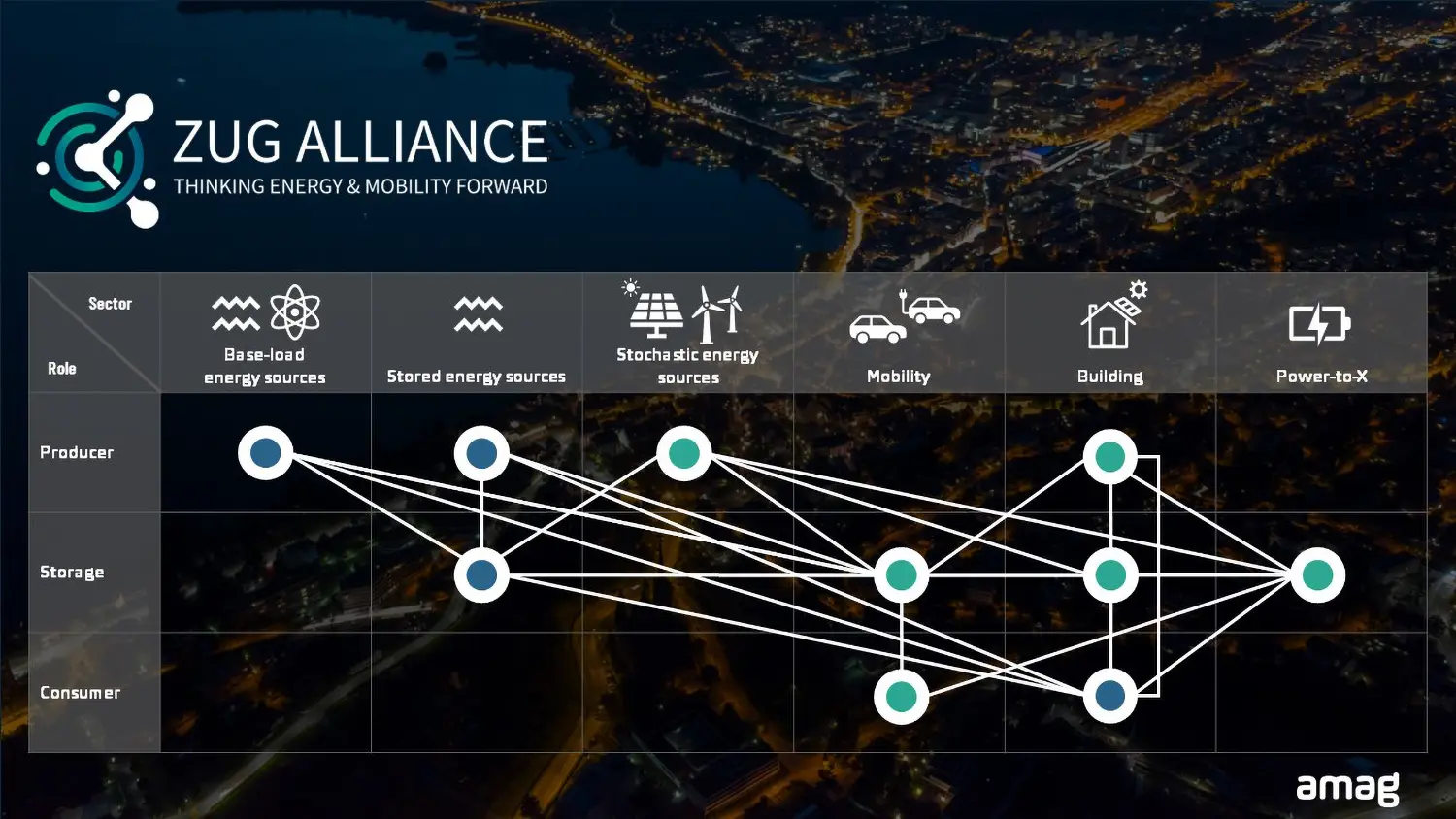
The «Zug Virtual Power Plant» is the umbrella over all energy projects of the ZUG ALLIANCE. Its guiding principle is «intelligence instead of copper»: the rising demand for electricity from e-mobility and heat pumps cannot be met with new lines alone. Storage, control, load shifting and sector coupling secure the same quality of supply at lower cost to the economy as a whole.

The initial phase is complete. The Canton of Zug supported it with CHF 442,500, but the members of the Zug Alliance bear the larger share of the effort themselves. It produced two products and a number of new findings. One is the model of temporary photovoltaic installations, which suits flat roofs that will only be used for a few more years. Such an installation can then be moved to another building without great effort and thus remain in use considerably longer, which saves resources. We have also built bidirectional charging infrastructure at several sites in order to help this charging model achieve a breakthrough with new findings.

Project 1 — Temporary and circular photovoltaics
Tech Cluster Zug · until Q4 2027
Flat roofs that will be renovated, built on or repurposed within a few years stay empty: a permanent installation with a 20-year commitment does not pay off there. With considerable support from Helion we introduced a standardised, modular plug-and-play solution with a reusable substructure. Three installations in the city of Zug and in Rotkreuz are in operation, further ones are under contract. After dismantling, modules and substructure are rebuilt on the next roof. For this to work beyond individual cases, a secondary market is needed: Switzerland expects up to 90,000 tonnes of end-of-life modules by 2050, while many components are still technically usable. If the current market assessment is positive, the ecosystem will be built from 2027.

Project 2 — Grid-serving charging
AMAG Group · until Q2 2028
Vehicle batteries become storage for buildings, sites and the grid. The results of the initial phase can be found further down this page.

Project 3 — LEG 2.0
Siemens Schweiz · commissioning Q3 2027
Since 2026 Swiss law allows local electricity communities (LEG): producers and consumers in a neighbourhood join forces and use locally generated electricity together. Initial calculations show that this barely pays for itself under today's rules. The project therefore examines the conditions under which an LEG with large producers and consumers works economically, in particular across grid levels 5 and 7, and including the flexibility of electric cars and trucks. Zug would probably be the first canton to realise an LEG spanning grid levels.

Project 4 — Dynamic grid tariffs
WWZ · until 2028
It is the grid component of the tariff that becomes dynamic; the energy component stays unchanged. The project measures which customer group actually changes its consumption behaviour, and at what level of incentive. The result is a recommendation for distribution grid operators.

Project 5 — PV push
WWZ · web solution from 2027
In the canton of Zug, only a small share of suitable roofs carries a photovoltaic system. What is usually missing is not the roof but the overview. The project is therefore developing a simple web and app solution that shows owners what their own installation would yield, which billing models apply and which association in the neighbourhood fits. Profitability is modelled and verified against real measurements.

Project 6 — Grid-serving batteries
WWZ · until Q2 2028
A large battery storage system of around 2 MW is being built in the WWZ distribution grid. It is to show which grid expansion measures can actually be avoided or deferred through peak shaving, buffering of solar electricity, voltage support and frequency stabilisation.

Project 7 — Flexibility and battery storage on large sites
Tech Cluster Zug · until Q4 2027
On a large industrial site, the available flexibility is being tapped: an electricity storage system in the energy management system, the large heat pumps of the energy centres, the thermal inertia of the buildings and the charging system of the electric truck fleet.

Scientific supervision
All projects are scientifically supervised — by Empa, the Lucerne University of Applied Sciences and Arts, the Bern University of Applied Sciences and the University of St. Gallen, among others. We make the measurement data openly available: what is tested in Zug should not have to be tested again elsewhere.

Grid-serving charging

To reach net zero, solar and wind energy must be expanded considerably. Both feed in irregularly, so storage is needed. The roughly 85,000 vehicles in the canton of Zug are exactly that — a storage system that has already been built and stands idle most of the time. The bidirectional-capable vehicles sold by AMAG up to August 2025 alone add up to a swarm battery of around 1.4 GWh.

In the initial phase, the ZUG ALLIANCE tested for the first time in Switzerland under real conditions whether this works. At three sites with deliberately different profiles, mass-market, standard-compliant charging stations were installed that communicate across manufacturers between vehicle, charging point and energy management.

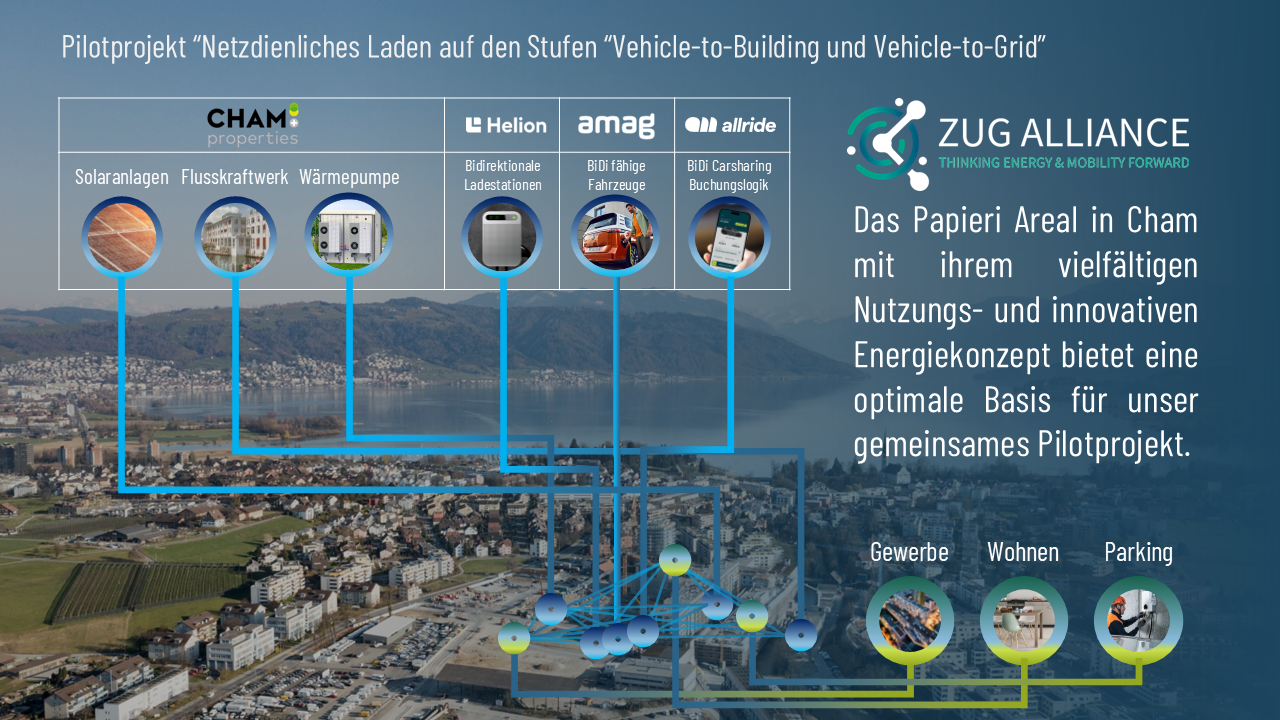
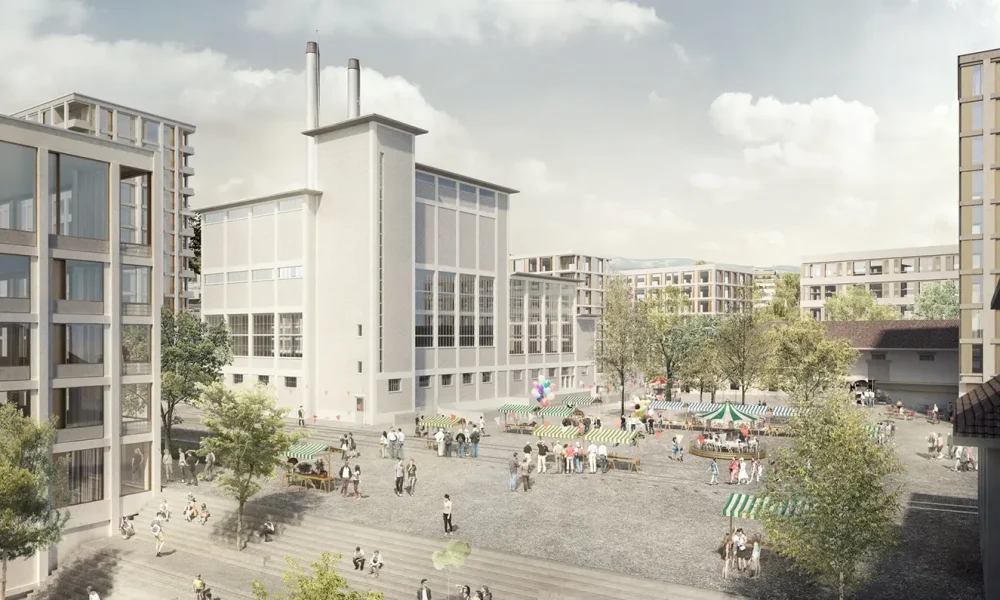
Papieri site, Cham — shaving peak loads. In this mixed-use quarter with its own hydro and solar generation, peak loads at the grid connection point were reduced by 16 to 23 kW per event, with response times in the range of seconds and without restricting mobility. The simulation shows that up to around 20 bidirectional stations are worthwhile on this site — more than 20 per cent of the site's peak load and a benefit of about CHF 18,000 per year.

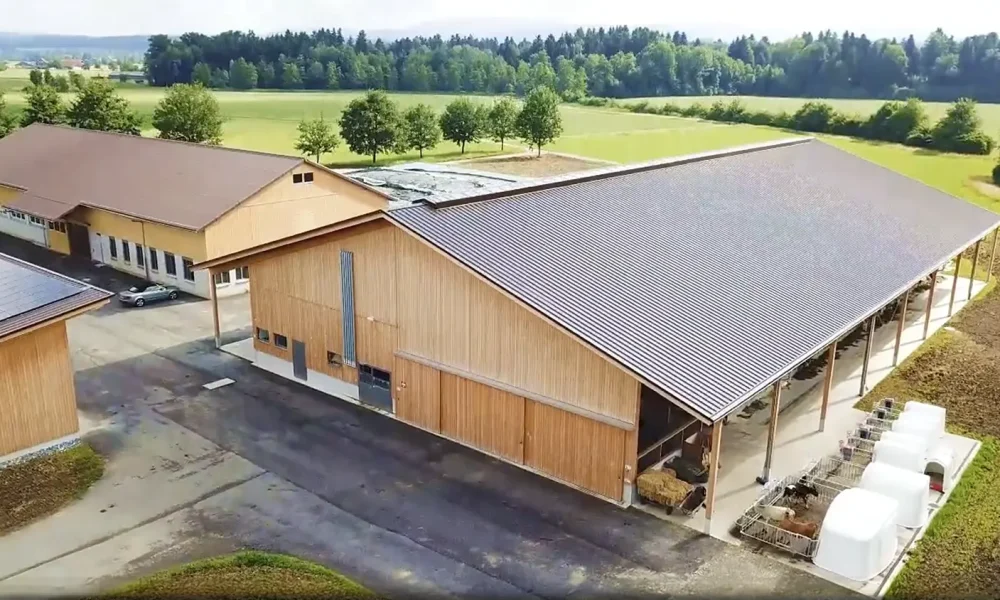
LBBZ Schluechthof — shifting solar power into the evening. At the agricultural education and advisory centre, 30 to 60 kWh of solar electricity were buffered in vehicle batteries every day. The self-consumption rate rose by up to ten percentage points over the measurement period. Two charging points save around CHF 1,800 per year; depending on assumptions, the payback period is three to six years.

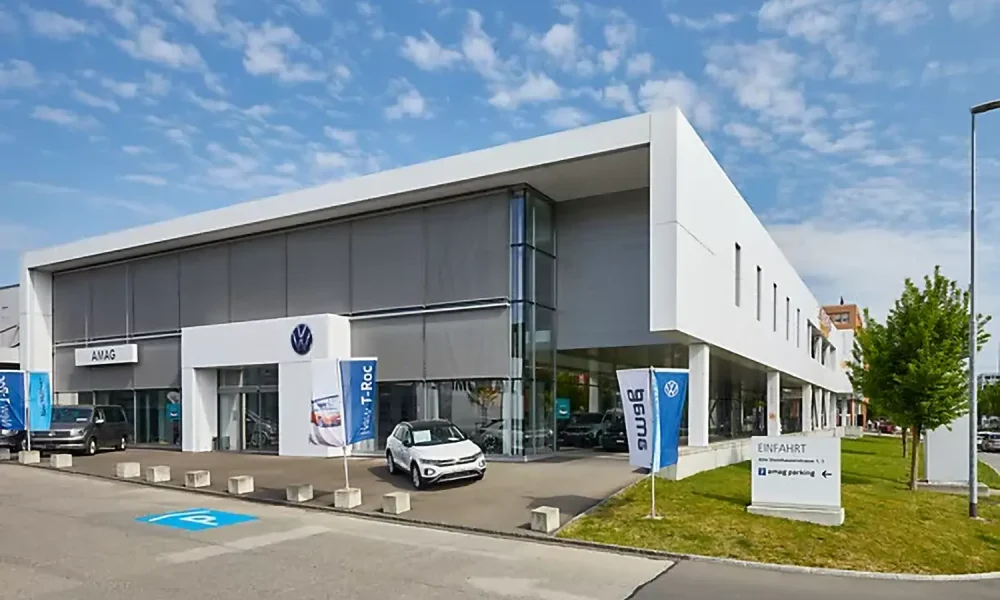
AMAG Retail, Cham — providing system services. The charging park with six bidirectional DC charging stations responded precisely to setpoint changes within seconds, meeting the requirements for control reserve products. Potential additional revenue amounts to around CHF 1,200 per year — on top of use cases such as self-consumption optimisation, which can run in parallel.

What we learned. Bidirectional charging works reliably and in line with standards, and under real conditions it is economically advantageous in all three use cases. Combining peak shaving, self-consumption and system services («value stacking») increases annual revenue by an estimated 30 to 60 per cent. Users' mobility needs were met at all times. Model calculations show that from a V2G share of 50 per cent in an electrified fleet, total system costs can already fall below those of a system without electric vehicles at all. What remains open is not the technology but industrialisation: interoperable systems, clear metering and billing processes, integration into real markets.

What comes next. In the exploration phase from 2026 we are driving standardisation forward, testing business and operator models and clarifying regulatory questions together with the canton and the federal government. The goal is to turn the technology into reproducible products and to scale it within the Zug Virtual Power Plant.

Papieri-Areal_2024_05_11
Papieri site, Cham Group — peak loads cut by 16 to 23 kW per event
ZUG-ALLIANCE_VW_Showroom_Cham
AMAG Retail Cham — control reserve demonstrated within seconds
ZUG_ALLIANCE_LBBZ_Schluechthof

LBBZ Schluechthof — self-consumption up by as much as ten percentage points

Automated ride pooling

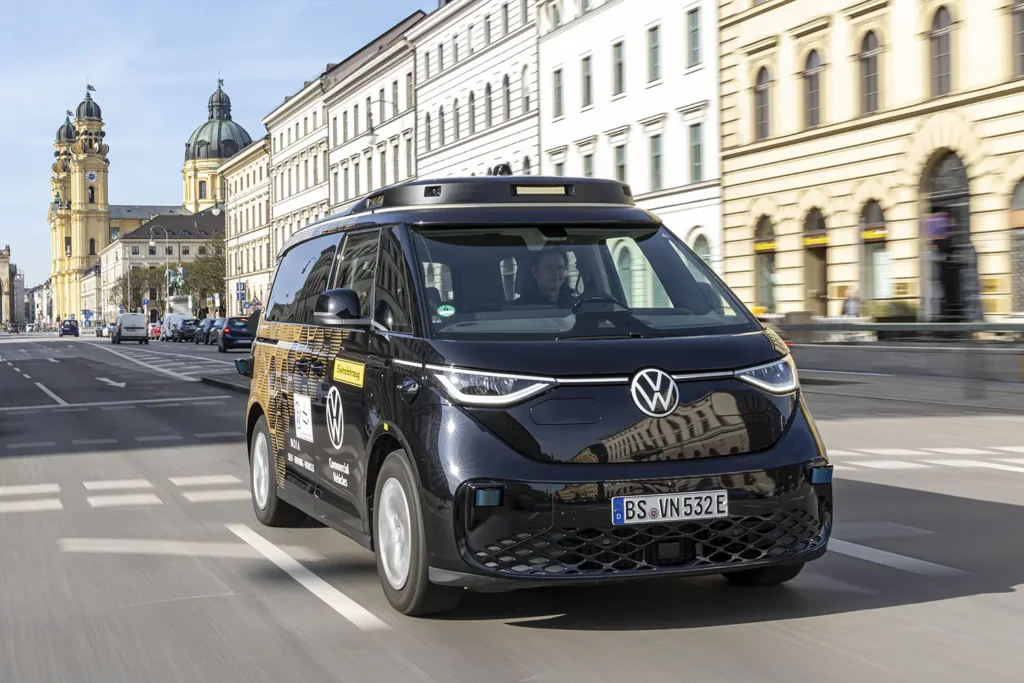
Ridepooling sits between a taxi and a scheduled bus: passengers are picked up on request and taken to their destination, and trips in a similar direction are bundled. Automated means that the vehicle drives without a driver.

On behalf of the Office for Spatial Planning and Transport of the Canton of Zug, the ZUG ALLIANCE prepared a feasibility study between September 2024 and April 2025 — led by its members AMAG Group and Zugerland Verkehrsbetriebe, with scientific support from the Institute of Mobility at the University of St. Gallen.

The study examines how such a service would need to be designed for the canton of Zug, whether it is technically and operationally feasible, what demand can be expected, what it would cost and what benefit it can bring to society. Automated ridepooling is conceived as a complement to public transport, not as a competitor: for people who currently use their own car, for people without a driving licence and for areas with gaps in public transport coverage.

The feasibility study is complete; the Canton of Zug decides on the next steps.